Quick note on breakfast cereal

I love playing around with the idea of realizing different projects in different genres – exemplified for me, by Douglas Adams’ quip about starting a new project:

People wanted me to do a CD-ROM of Hitchhiker’s, and I thought, “no, no.” I didn’t want to just sort of reverse-engineer yet another thing from a book I’d already written. I think that the digital media are interesting enough in their own right to be worth originating something in. Because, really, the moment you have any idea, the second thought that enters your mind after the original idea is, “What is this? Is it a book, is it a movie, is it a this, is it a that, is it a short story, is it a breakfast cereal?” Really, from that moment, your decision about what kind of thing it is then determines how it develops. So something will be very, very different if it’s developed as a CD-ROM than if it’s developed as a book. (From an interview with the Onion AV club, reprinted in The Salmon of Doubt)

Well, the playwright Lucy Prebble just published a piece on the New York Times‘ ArtsBeat blog about gaming and narrative and form and argument.  It’s quite good.

Quick note: “Snow Fall”

The New York Times has been pushing “Snow Fall,” a multimedia article about the February 2012 avalanche in the Cascade Mountains.  It’s a six part story, much like one of the NYT Magazine‘s feature articles, but supplemented with video interviews, interactive maps, and other material designed to bring the story to life.  It takes some time to get through, but is, I think, worth getting into, because it seems like one direction that newspapers might take in this “digital age” of reduced print circulation.

That being said, I’m not convinced that the story really needed all of the bells and whistles.  The story itself – of 16 professional or semi-professional skiers caught in an avalanche – is compelling enough on its own.  Interviews with survivors are heart-wrenching, but for me the most difficult part of the piece was the narrative reconstruction of the victims’ loved ones’ reactions.  Many people are familiar with print analogues to stories like these – the Magazine’s story last week about Barney’s, for example – which could be augmented with digital material, and I suppose there’s an argument that says that the more information included, in as many different mediums as possible, the better.  And some parts of “Snowfall” worked really well.  As you read each part, the text scrolls over background images – in some cases of snow, in others of trees destroyed by the avalanche, and, perhaps most effectively, over maps which highlight the position of the skier being discussed at the moment.  But in other places, the information feels superfluous, or not fully integrated – digital content for the sake of novelty, rather than for the sake of telling a better story.

I hope to see more of this kind of thing from the Times, because I think that it charts some rich terrain for the future of journalism (and I’d frankly love to play around with something like this for history writing).  I also have to wonder whether some kinds of stories are suited to this treatment more than others.  Because I’m a disaster studies nerd, I did find myself thinking that disasters are particularly well-suited to these kinds of pieces (I was actually reminded a couple of times of the “Murder on Beacon Hill” documentary and app – which, if you live in or near Boston, is really worth checking out).  Disasters (or in the case of the Beacon Hill piece, murders) often feature a discrete cast of characters, a series of events easily fit into narrative form, and take place in a limited enough space to make things like maps useful.  I’d really love to see the “Snowfall” treatment applied to a more data-driven story though, because I think a lot of great work has been done recently with visual and interactive representations of information that could really enhance readers’/viewers’ experience of a story.

Dream course

Despite the stress, one of the perks of being on the market is that I get to spend entire days sitting around and thinking about dream classes – not dream students, or dream institutions – but the classes I’d teach if I had all the leeway and resources in the world.  It’s tremendous fun, and means that I occasionally stumble across brilliant and compelling work I’d not previously had a chance to explore.  Today, that was Jill Lepore’s piece in the JAH on biography and microhistory.  If you have institutional access, read it.  It’s great.

I came to this by way of thinking about how to design a class that centered the historical challenges of reconstructing historical actors’ experiences – and particularly those of people who aren’t likely to have left a strong mark on the historical record. (An aside: at the Against Recovery conference hosted by NYU a few weeks ago, a number of people called for scholars of race, slavery and the enslaved to move beyond the language of “recovery” for accessing the historical experiences of the enslaved, the freed, and free people of color – it was a fascinating conference all around, but I especially loved how we were pushed to think about how the very words we use to describe historical practice privilege some narratives over others)  My ideal version of this class combines Kathleen Conzen’s course at the U(C) on American immigration history, for which the final project asked us to use census records to track an immigrant family living in Chicago at some point in the past;  Martha Hodes’s class at NYU on “Reconstructing Lives” which focuses on the craft of writing a history centered on one particular person – and the craft of historical writing more broadly. (Her “Four Episodes in Re-Creating a Life” beautifully illustrates the challenges inherent in this), and Nicholas Wolfe ‘s, also at NYU, which uses the 1860 census as a common data set and teaches old-school social history statistical analysis.  I’m also captivated by the work that the folks at Zooniverse are doing in citizen science, though the New York Public did something similar in the humanities with its menu transcription project.

In an ideal world, I’d love to construct a class around a data set (say, for example, the Charleston donors I mapped yesterday) and ask each student to write a microhistory of one of them.  Some are easier than others, though the ones that are most prominent might have a larger collection of extent personal papers, which is great for research, but perhaps stressful for already taxed undergraduates.  We’d begin with tracking their donors through various censuses – probably using something like Ancestry.com – before branching out into other kinds of archival material.  Once the students had built up biographical sketches of their donors, we’d move on to the social/cultural work that microhistory can do so well – using these people to tell us more about the world of antebellum South Carolina? Reading cultures in the antebellum South? Relationships between social status and philanthropic giving?  I’d love to end the class – maybe the last third of the term – with a collaborative project, in which students come back together to write a history of their cohort, focusing on whatever has popped out for them as the important historical question that their donors’ lives help illuminate.  I imagine that several iterations of a class like this would produce an archive of its own – a series of biographies, micrhohistories and essays that describe the data more completely than I’d ever hope to do on my own, and which students would be able to cite as examples of their public work as they move on from my class.  In the most perfect of worlds, I’d be able to find a data set that is populated by people local to wherever I’m teaching, which would (hopefully) encourage students to get themselves to local archives, maybe speak to descendents, or even explore the lived environments of the people they’re researching.

As much as this would be a blast to teach (it’s archival!  it’s historical methodology! it’s local history!) I also worry about deploying students in service of what, ultimately, are research goals that could help me out quite a bit.  I like the idea of finding a population of people who share some attribute, beyond their physical location (though if the geographical confines were small enough, it might be interesting to also make this a class about community history) and I have this massive, 6,000+ data set of famine donors that I’m itching to work on, but I’m concerned about exploiting student labor in service of my own project.  On the other hand, some of the papers that have come out of the citizen science work cite everyone who helped out with the project online, and science labs do this kind of thing all the time, and give students first or second authorship on the papers that come out of the research.

Off to write a dream syllabus.

Maps, maps and maps

I’ve been playing around with a data set of 95 donors whose names were published in the Charleston Mercury and Charleston Courier.  I’m a data/census nerd, so there’s a lot of fun to be had with lists like these.  So now I’ve got this database that tracks where donors lived, how much property they held, what jobs they held and how many enslaved people they owned.  I’ve been plotting the donations with google maps, which is fine for showing just how widely appeals circulated, but doesn’t really do much else for visually describing the data.
[googlemaps https://maps.google.com/maps/ms?msa=0&msid=214677819635357292007.0004d08361291f904d1c3&ie=UTF8&ll=34.016263,-82.283671&spn=3.169364,6.305034&t=m&output=embed&w=425&h=350]
I’d love to do something more with this – either plotting the data on an older map, or figuring out some way to code the markers to indicate amount of donation, or slaveholding/non-slaveholding, or profession.  A few years ago, after an AHA panel on network analysis, I decided that I was going to learn to code network diagrams over winter break.  I’ve similar aspirations for learning GIS, but I’m not holding out hope for it being an easy, or quickly doable task.

Vicky

From the New Orleans Picayune of September 9th, 1850:

At a recent meeting of Irishmen in New York, among other matters, it was Resolved, that any person who thence shall toast or drink the health of Victoria – the Queen of the English – merits and shall receive, socially and politically, the disfavor and contempt of every Irishman.

Donor demography

An item titled “donor demography” is always on my to-do list – I have a database with the names of over 5,000 individuals and groups who gave to famine relief, and there always seems to be something more I could be doing with that data.  I’ve been playing around with a sample of 120 American donors.  Telling a story about these people is tricky.

The easiest, and most bloodless approach is a statistical one:

In a sample of 12o donors, the largest single donation came from the Society of Friends in Philadelphia, who in February of 1847 collected $7,200.  The smallest donation was of $1, and came from a “Friend of Ireland” somewhere in the vicinity of Charleston.  The average donation was $443, but the most commonly donated amount was $5.  The median donation was $50, and the geographic distribution of this sample (drawn from Charleston and New York Newspapers) shows donors scattered across the United States.

Another approach is to break them up into smaller groups, say, professional men (doctors, lawyers, clergymen, judges and military officers); men whose names don’t indicate rank or profession; women;  towns and groups of people, and write a speculative narrative about what might have prompted men or women of a certain type to give.

From February to May of 1847, professional men across the United States contributed to famine relief.  Some, like the Reverend Jas. Dupree of Summerville, South Carolina, gave as little as $3, while others like Dr. Benjamin Waldo, gave as much as $200.  In the 1850s, a skilled laborer could make, at most $300 in a year, so the doctor’s donation certainly, and Reverend Dupree’s donation possibly represented a sizable portion of their household income.  A significant majority of these men worked with a church in some capacity, suggesting that frequent exposure to doctrines of virtue through charity might have effectively encouraged some to give.  These men also would have had access to the dominant newspapers of the day – easily affording penny periodicals like the New York Sun or Charleston Courierand would consequently have been exposed to many of the circulating ideas about Americans’ obligations to the suffering Irish.

Finally, one of these donors from one of these groups, say “Dr. Reynolds” of Camden, SC, might be used to extrapolate the possible charitable motivations of men.

This “Dr. Reynolds” could have been any one of three Reynolds men living in Camden in 1840 (or someone else entirely, who emigrated in the intervening seven years).  All three Reynolds residents of Camden owned slaves.

There, the trail goes cold.  I could, with infinite time and resources, track down all of the donors mentioned in the records of famine charities, and that’s actually something I aspire to do some day, but those people who are recoverable from mid-nineteenth-censuses will likely prove to be remarkable in some way – an uncommon name or profession, or living in an uncommon place – rendering them less than ideal examples of the average or exemplary donor.  Ultimately, I’m not convinced that having the stories of five thousands individuals will tell me more than trying to make sense of the groups they belonged to, or how they identified in their communities, but I’m neither sure what the best way to tell their stories is.

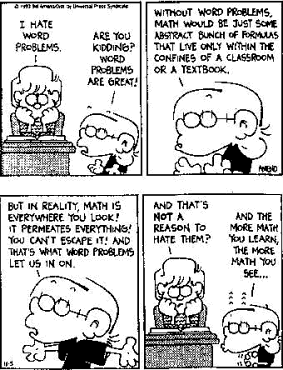
The more [history] you learn, the more [history] you see


Credit: Bill Amend at http://www.foxtrot.com/

I’ve been throwing out variations on this line since I first saw this strip, and I’ve been having quite a few “the more history you learn…” moments in the past few weeks because of the hurricane.

On Saturday, the Press of Atlantic City reported that NOAA classified Sandy as a post-tropical cyclone right before it made landfall in NJ, a decision which is estimated to save homeowners/cost insurance companies millions of dollars in deductibles.  NOAA isn’t a political body, but the classification is a fortuitous one for those facing insurance claims for their destroyed property, and it was echoed by NJ Governor Chris Christie when he issued an executive order prohibiting insurance companies from charging hurricane deductibles.  (For a really fascinating discussion of the relationship between disasters and flood insurance, see parts II and III of Ted Steinberg’s Acts of God.)  Though most of the article was about the impact of this call on insurance claims, the article briefly digresses into talking about what it means for a scientific body to be in charge – however indirectly – of a huge financial decision:

“If this was a court case, you’d have multiple meteorologists on the stand,” said Campbell H. Wallace, an attorney for the Professional Insurance Agents of New Jersey.

There is no court case. Insurance companies in New Jersey, New York and Connecticut have agreed to waive costly hurricane deductibles, which could have run in the millions of dollars along the three-state area.

Wallace said the insurance industry accepts the fact that the National Weather Service is “legally tasked” with making such determinations. He said meteorologists are judged by their peers and credibility is paramount to them.

The Wallace quote reminds me of another apparently ancillary fact about the Atlantic hurricane – the Galveston Hurricane of 1900 which killed upwards of eight thousand people.  Although meteorologists, both in the U.S. and in Cuba registered concerns about a storm headed for the Gulf of Mexico, the National Weather Bureau’s policy was to limit the use of the word “hurricane” in official correspondence, because it might engender widespread panic.  On top of all of the other reasons for the high Galvestonian death toll (the misguided belief that hurricanes never struck that part of the Gulf, little way for ships to communicate observations from the middle of a storm, buildings that were particularly susceptible to storm damage) some of the blame must go, and has gone, to whomever made the decision that “hurricane” was just too dangerous a word for the American people.

In some ways, what is happening with insurance companies today is the flipside of what happened with the NWB and Galveston – in defining what counts as a hurricane, and what is “merely” a post-tropical cyclone (the two can be differentiated by as little as 1 mph difference in maximum wind speeds measured on the ground) the NOAA is saving – intentionally or no – thousands of people millions of dollars in total.

Categorizing Sandy

Hurricane Sandy happened two weeks ago – it (not she – because a lot of very smart people have written quite a bit about how oddly and quickly the violently gendered language around the hurricane spun out of control) decimated New Jersey and New York, particularly coastal communities along the Jersey Shore, barrier islands, Staten Island and the Rockaways.  I’ve lived in New Jersey my entire life, and although the town I live in wasn’t particularly hard-hit, the emotional impact of the storm – even two weeks and a presidential election later – is still made manifest here.

Mario Tama/Getty Images, via the Baltimore Sun’s “Darkroom” blog.

I’ve been trying to think about how to write about this from the perspective of someone who studies disaster, and I keep coming back to the need to explain that I am from this place where this thing has happened – that I am not merely a distant observer of catastrophe.  While I’m sure some of that impulse comes of not wanting to exploit a terrible thing in service of my own thoughts on an academic subject, I think that it also suggests something about the field – if there is one – of disaster studies – and maybe also something about how Sandy was reported until the Presidential election overshadowed all other news.

One of the things I open with when I  teach disaster history is the degree to which disasters make for a fractured historical narrative.  A number of quite interesting books have been written about individual disasters, but only a few historians – most notably Ted Steinberg – have tackled disasters as historical subjects.  Jonathan Bergman has recently noted that “disaster studies have experienced some interesting developments and offer great lessons for historical scholarship, yet this reviewer is bedeviled by the suspicion that the subject has not formally ‘arrived’. Reconnaissances have been made, and initial volleys fired, but no scholarly introductions have been tendered on the historical field. Neither has there been a call for a sustained and rigorous discussion of its methods and values”  I think, in part, that the very objects of study are deviations from the norm, and the experiences of people who lived through them are wildly divergent from their everyday lives.

This isn’t to say that disaster history doesn’t have ways of dealing with the fact that the things it studies are in many ways outside of everyday experiences.  Some, including Steinberg, Mike Davis and Matthew Mulcahy, situate natural disasters in terms of the human circumstances that produce them.  For the past few years, the classic example invoked to illustrate this point is Hurricane Katrina.  In fact, the authors of the essays in There is No Such Thing as a Natural Disaster: Race, Class and Hurricane Katrina point out that it was the social conditions in New Orleans that killed so many people, rather than the eleventh named storm of the 2005 storm season – any major storm would have done the trick, as it were.  Other scholars, particularly scientists who study natural hazards, have pushed back on this historicized or contextualist approach to disaster studies, noting that without catastrophic events, there are simply no disasters to study – they note that particular aspects of that particular storm were responsible for its “disasterousness.”  However, whether we study the natural event itself – in the case of Sandy, a “post-tropical cyclone” – or, if we take the approach described by Alessa Johns as one in which, “If a disaster is defined as a physical phenomenon – an earthquake, a hurricane, or a flood, for example – affecting a human group adversely, then surely the activities of that human community, both before and after the event, require investigation,” a disruptive event is still at the center of the story.  Put another way, both of these approaches lead to a field of disaster studies characterized by unique “firefly events,” rather than grand narratives.

“Ruins at Cranston, R.I. – The Great New England Hurricane of 1938”

This is a very long way of saying that the state of the field of disaster history mapped very closely onto what I experienced waiting for Sandy to hit, and experiencing its aftermath.  People understood the possibility of disaster, but had little by way of a framework for approaching, anticipating or understanding it.

Both before and after the storm, commentators drew comparisons between Sandy and Katrina (largely in the context of Presidential responses).  Others looked farther afield, positioning Sandy in terms of the 1938 hurricane, dubbed by some the “Long Island Express,” which had decimated much of New England, leaving high water marks that are still visible today.  Commentators also reached for superlatives – “New York Subways Hit with the Worst Disaster in 108 Years”; “Ranks Among the Worst Economic Disasters”; and the Wikipedia article’s first paragraph casts Sandy as the largest Atlantic storm on record, the second most expensive Atlantic hurricane in history, and one of the strongest storms of all time. (Usual caveats about Wikipedia use apply here)

It seems like, short of comparing this terrible event to other terrible events, we have almost no rubric for understanding what happened.  For those living through this, the conditions that lead to overbuilt beach communities, or a lack of effective dune screening, or any other structural cause don’t matter, and offer no perspective on loss.  I think that some of these impressions must bleed over into the historiography, because the same comparative framing happens there too.  While I’m absolutely committed to a deeply contextualized social, political and economic understanding of disaster, I also wonder if looking at patterns in aftermaths – in policy, or environmental change, or even demography – might be another way to understand disasters as part of a coherent field, rather than as sudden and disruptive events.

I was also struck by something a friend said to be over e-mail a few days after Sandy.  He mentioned (I paraphrase) that he wondered if, as our possessions, houses and furniture become more and more similar/big-box/Ikea, that the aftermath of very different disasters wouldn’t start to look, and feel more and more the same.  That might be the case from an outside perspective – the worst-hit parts of the Rockaways could certainly have been hit by a tornado or an earthquake – but so long as historical practice is rooted in using sources produced by people who lived through events, disaster history will always feel – to some degree – scattershot.  The people telling us about these things did in the past, and are likely to continue to, describe them in exceptional and unique language, contextualizing them, if at all, in terms of other “worst,” “most expensive” and “most deadly” events.  Given that, it’s easy to see why so many scholars, taking historical actors at their word, replicate that impression of disasters as disruptive, rather than the product of structures, in their own work.

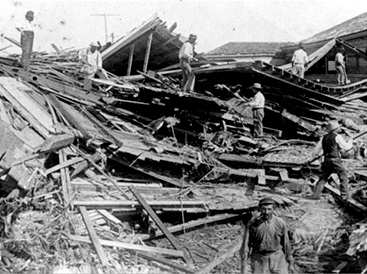
Survivors searching the debris in Galveston, Texas. In the years following the storm, the entire city was raised 17 feet to prevent future flooding.

Disasterous truth

Radiolab – produced by Jad Abumrad and Robert Krulwich – recently released an episode called “The Fact of the Matter” which explored the ways in which “getting a firm hold on the truth is never as simple as nailing down the facts of a situation.”  Radiolab is usually presented as a series of three riffs on the central theme, and this month’s first and last segments played around with the idea of absolute truth (via Errol Morris’s discussion of Crimean cannonballs) and whether truth matters at all (via Tim Kreider’s story of a friend whose life seemed to contain nothing true).  The middle section, called Yellow Rain, though, seemed to go off the rails a little, hinting – though never explicitly engaging with – the idea that privileging some truths over others can actually be an act of violence.

The question at the heart of Yellow Rain was whether soviet chemical weapons had been used on the Hmong people in Laos after the end of the Vietnam War.  The Hmong had been U.S. allies during the war, and after American troops left the region, were subject to brutal attacks by the Viet Cong and the Pathet Lao.  The Hmong fled into the jungle, where they first encountered showers of yellow droplets falling from the sky.  These showers were followed by livestock deaths, stomach pain, and in some cases, death.  Between the Viet Cong attacks – which often included the aerial assaults – and this Yellow Rain, many Hmong today describe the period after Vietnam as a genocide. Refugees gave leaves with the yellow substance to aid workers, who sent them to a U.S. lab which found pollen and high levels of poison.  They concluded that the Soviet government had created a poison that could be deployed via pollen, President Reagan used the lab’s findings as evidence of Soviet chemical weapons capability, and jump-started U.S. chemical weapons programs.  In the aftermath of that decision, other U.S. scientists re-examined the Yellow Rain, argued that the original lab had made an error, and that the substance was nothing more than bee feces, released all at once when the bees came out of hibernation.

This could have been a fairly straightforward story about how governments lie, or accept incomplete information, in order to pursue nefarious ends – and that seems to be the story that Robert Krulwich was interested in telling.  But at the end of the piece, Krulwich and a Radiolab producer, Pat Walters, interviewed a man named Eng Yang, who had actually lived through both Viet Cong attacks and Yellow Rain.  They asked Yang, via his niece, author Kao Kalia Yang, who was acting as an interpreter (and who sometimes interjected her own commentary), what he thought about the fact that scientists had found that the Hmong had not actually been the victims of chemical warfare:

Yang: [If this was just bee feces] How do you explain the kids dying? The people and the animals dying?
Jad voiceover: We asked Kalia to tell Eng what the scientists had told us, that the Hmong were definitely dying.
Scientist voiceover: The Hmong were under real attack.  They were being fired at from airplanes and by soldiers.
Jad voiceover: But more importantly, even if they weren’t being killed by those direct attacks, they were on the run through the jungle.  They were malnourished, drinking from contaminated streams, diseases like dysentery and cholera were rampant, and the way a lot of people see it, they might have misattributed some of those mysterious deaths to this cloud of bee poop that looked like it could have been a chemical weapon. But Eng says no, not a chance.
Yang: I speak to what I’ve seen, and there is no inkling in my mind that those deaths were not caused by starvation, dysentery, there was chemicals that were killing my people.
Robert: And, um, did the source of the rain, was there always a plane and then rain? A plan and then rain? Or did sometimes the rain happen without a plane?
Yang: We never saw what it was, it was always being dropped on them, and it was always being dropped where there were heavy concentrations of Hmong people.
Robert: Hm.
Yang: That’s what we knew.
Robert: But we don’t know whether there was a plane causing it, or did you just see the dust?
Yang: Bullets and bombs all the day, every time.
Robert: Hm.
Yang: And so whether, whether it was a bombing plane or a yellow plane, it was incredibly hard to distinguish.  Everybody runs when you hear the planes, so Hmong people didn’t watch bombs coming down.  You came out, you sneak your head out, and you watch what happen in the aftermath.  You saw broken trees, you saw yellow in the aftermath of what had been bombed.  I saw with my own eyes the pollen on the leaves eating through holes.  With my own eyes I saw pollen that could kill grass, could kill leaves, could kill trees.
Robert: But he himself is not clear w-, whether it’s the bee stuff or whether its other stuff, because there was so much stuff coming down from the sky.
Yang: You know that there were chemicals being used against the Hmong in the mountains of Laos.  Whether this is the chemicals from the bombs or yellow rain, chemicals were being used.  It feels to him like this is a semantic debate, and it feels like, um, like there’s a sad lack of justice, that, that, that the word of a man who survived this thing must be pitted against a professor from Harvard who’s read these accounts.
Robert: But, as far as I can tell, your uncle didn’t see the bee pollen fall, your uncle didn’t see a plane, all of this is hearsay.
Yang: [audibly upset] My uncle says, um, for the last twenty years he didn’t know that anything, anybody was interested in the death of the Hmong people.  He agreed to do this interview because you were interested. You know, what happened to the Hmong happened, and the world has been un-, uninterested for the last twenty years.  He agreed because you were interested.  That the story would be heard and that the Hmong deaths would be re- documented and recognized.  That’s why he agreed to the interview, that the Hmong heart is broken, that our leaders have been silenced, and what we know has been questioned again and again is not a surprise to him or to me.  I agreed to the interview for the same reason, that Radiolab was interested in the Hmong story, that they were interested in documenting the deaths that happened.  There was so much that was not told, everybody knows that chemical warfare was being used.  How do you create bombs if not with chemicals?  We can play the semantics game, we can, but I am not interested, my uncle is not interested, we have lost too much heart, and too many people in the process.

Yang ends the interview, and there are about 15 seconds of “radio silence” before cutting to a conversation between Jad, Robert and Pat the producer.  In the course of that conversation, Pat says”

“that moment was when the whole story changed for me … there was something about, like, the way that she was pointing away from the thing that we had been looking so hard at, and saying, stop looking at that, look over here … she didn’t convince me at all that this was a chemical weapon, but she convinced me that we were missing something … until she said the things she said at the end of that interview, I don’t think that I fully appreciated the volume of pain that was involved in that moment for them.”

Jad chimes in, saying that he understood her to be saying:

“quit focusing on this yellow rain stuff, because when you do that, you’re shoving aside a much larger story, namely that my people were being killed.”

Robert, though, seems to remain unconvinced that the Yangs’ truth was significant.  He says, in response to Jad:

“Right, that’s exactly what she’s saying.  And that is wrong.  That is absolutely, to my mind, that is not fair to us.  It’s not fair to ask us to not consider the other stories and the other frames of the story.  The fact that the most powerful man in the world, Ronald Reagan, used this story to order the manufacture of chemical weapons for the first time in twenty years, I mean, that is not unimportant, that’s hugely important, but it’s not important to her, so should that not be important to us?”

He goes on to say that while he personally found her reaction to be “very balancing,” that “her desire was not for balance, her desire was to monopolize the story, and that we can’t allow.” (emphasis mine)

There’s a whole lot to unpack there, but I was forcibly struck by two things:  The first was the degree to which western narratives were privileged over non-western ones.  This isn’t just a problem for Radiolab. In a 2008 book on terrorism, Matt Meselson, one of the scientists whose work discredited the yellow-rain-as-chemical-weapon conclusions, opens a section on the “composition of the alleged agent” by noting that “none of the alleged attacks was witnessed by a Western observer. The most tangible evidence bearing on the allegations consisted of the samples of the alleged agent turned in by refugees, and the laboratory analyses of these and other environmental samples, of blood and urine from alleged victims.” Meselson certainly has a horse in this race, so it’s not that surprising that his current work continues to defend his findings from the 1980s.  However, his opening sentence implies that if there had been Western observers, scientists would not have had to rely on the word of non-westerners – these refugees and alleged victims.  While Radiolab never came out with so explicit a demarcation between trustworthy narrators (Western observers) and untrustworthy ones (alleged victims), the arc of Krulwich’s interview with the Yangs reinforced that paradigm.  In light of the final piece in the episode – which argues that the lies told by an individual (American) man about his life, to his friends, shouldn’t matter, because experientially, they knew who he “really” was – it’s hard not to see a disparity between whose truths Radiolab trusts, and whose truths they don’t.

My second thought had to do with the ways in which we (scholars, historians, journalists) use peoples’ experiences of disaster.  Krulwich’s comment at the end of the interview that it was wrong for the Yangs to assert their own truth, and that in doing so they were trying to monopolize the story (language, along with the assertion that Yang’s experience was “hearsay” that Krulwich later apologized for) suggests that, in the moment, he thought that the story about how Reagan used these accounts – the lie that Reagan told to jump-start U.S. chemical weapons production – was a more important story than the Yang’s accounts of the Hmong genocide.  Understandably, I think, Yang disagreed, and that moment could have lead to a really productive discussion of what it means to use one population’s sufferings in service of social or political arguments that are almost entirely divorced from them.  I think that Krulwich implied that while the Hmong genocide only affected the Hmong people, Reagan’s decisions as “the most powerful man in the world” impacted everyone, including the Hmong, rendering the “truth” of Reagan’s claims more important than the “truth” of the Hmong’s experiences.  I also think that there could have been a really productive conversation about the ways in which denying particular truths can be, in itself, an act of violence.  Jad and Pat tiptoed up to the edge of that conversation in the piece following the interview, but neither they, nor Robert either in the episode or in his follow-up commentary, fully acknowledged the trauma they might have inflicted – both to the Yang’s and to other people whose experiences of violence and genocide are still and often silenced.

I see this kind of appropriation all the time in my own work, when donor groups in the 1840s used narratives coming out of Ireland to make political arguments about their own circumstances, bolstered by the moral value of their donations to distant sufferers, but before listening to this piece, I don’t think that I had considered the impact that those appropriations might have had on Irish people.  Most of those starving in Ireland probably wouldn’t have known that New Yorkers or Charlestonians were using their suffering as a proxy for either immoral landholding practices in upstate New York, or the “injustices” foisted upon Southern slaveholders by abolition campaigns, but Irish emigrants might have.

I think it’s also worth thinking about whether the actual composition of the yellow stuff actually matters at all.  In the Errol Morris piece, one contributor notes that it might not matter whether a war photographer staged a famous picture of the Crimea, because the sense evoked by the picture was a more accurate representation of the experience of war than any un-staged image ever could.

[Edited to fix embarrassing misspelling]
Forthcoming/in press/an actual, physical, published object

My two copies of The Atlas of the Great Irish Famine came in the mail today.  It’s a lovely volume, and I’m pleased to say that the reviews so far have been overwhelmingly positive.  As a junior scholar among many luminaries studying the famine, I didn’t expect any mention at all in any of these reviews (and had at least one nightmare in which someone praised the book effusively, but wrote that my piece should never have been included … ) so I was pleasantly surprised (read: over the moon) to find that the September 20th segment of Today with Pat Kenny not only praised the book as a whole, but mentioned me by name!

In a few months, the issue of Early American Studies I’m editing with Jerusha Westbury will also be a reality.

I don’t know how people for whom publishing is old hat feel, but from this end, seeing my name in actual print in an actual book is pretty cool.